The Leopard’s Palate
Hunting the World’s Best Cuisines
2026-03-05
Nutritional Content & User Ratings
How do macronutrients (protein, carbs, fats) compare across the highest and lowest rated cuisines?
Key Insights
Higher-rated cuisines tend to be richer in fat - and that’s no coincidence.
Fat carries flavour, improves texture, and keeps you fuller for longer. Turns out, people eat with their senses first.
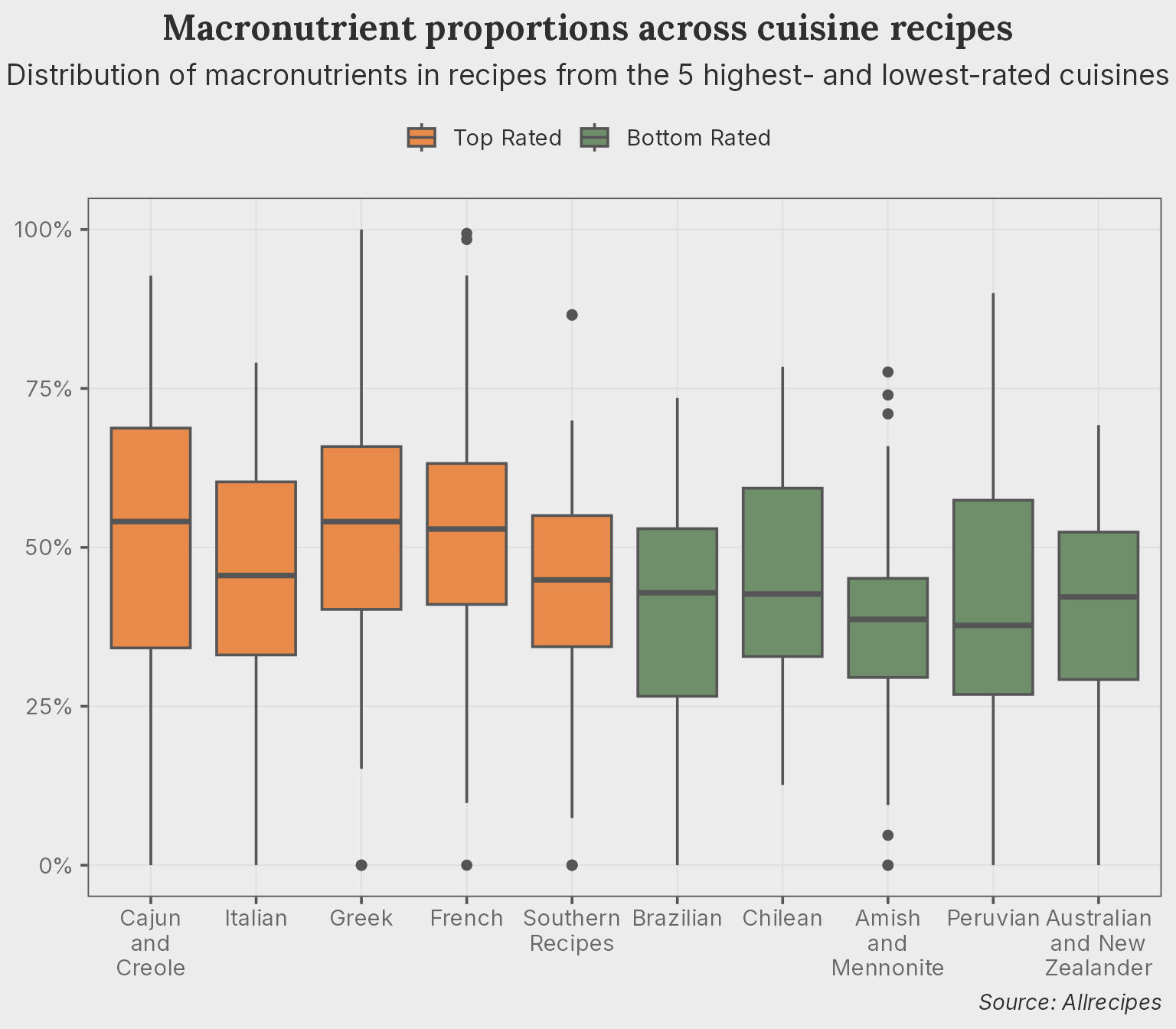
Nutritional Content & User Ratings
How do macronutrients (protein, carbs, fats) compare across the highest and lowest rated cuisines?
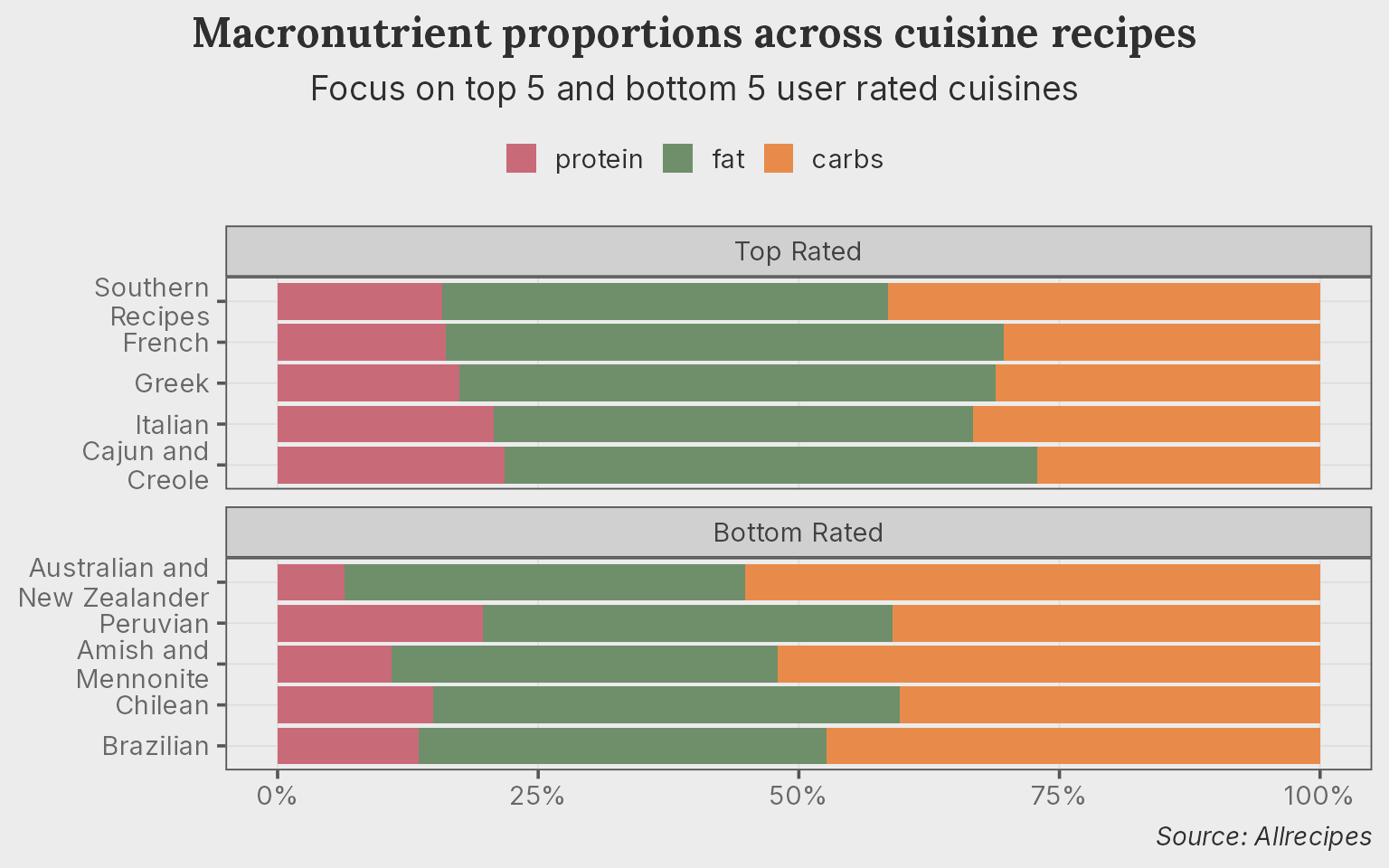
Observations
Protein tells a different story - consistently low across the board.
Most recipes are built around carb staples, with protein playing a supporting role rather than the star.
Representation & Ratings Over Time
How has the representation of Chinese, Italian, Japanese, and Indian food changed over time, and how have their ratings evolved during this period?
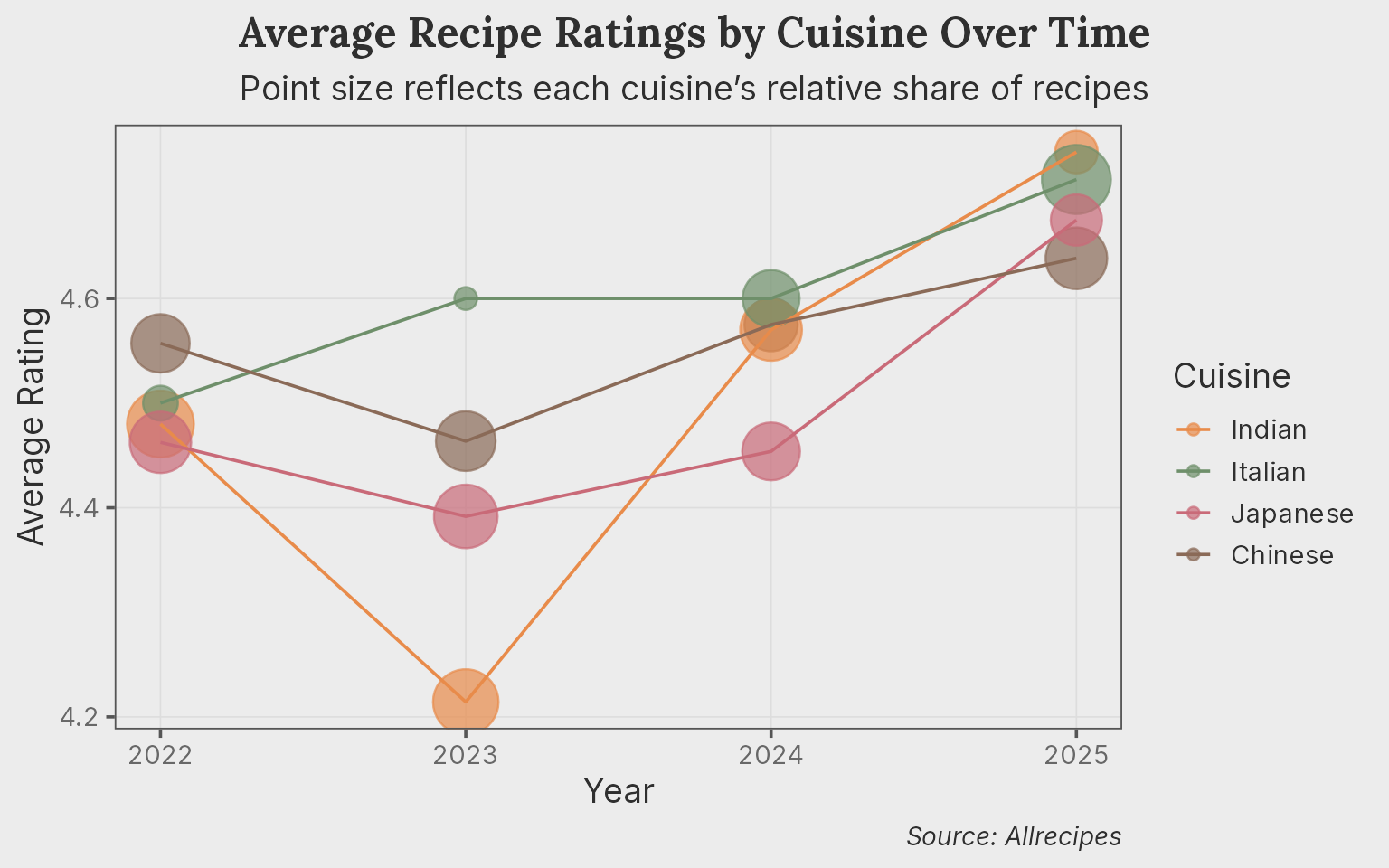
Notes
All four cuisines rate well but Italian and Japanese are pulling ahead, growing both in share and ratings.
Japanese climbs steadily, with rising ratings and an expanding presence.
Indian punches above its weight despite a smaller presence, while Chinese stays quietly consistent.
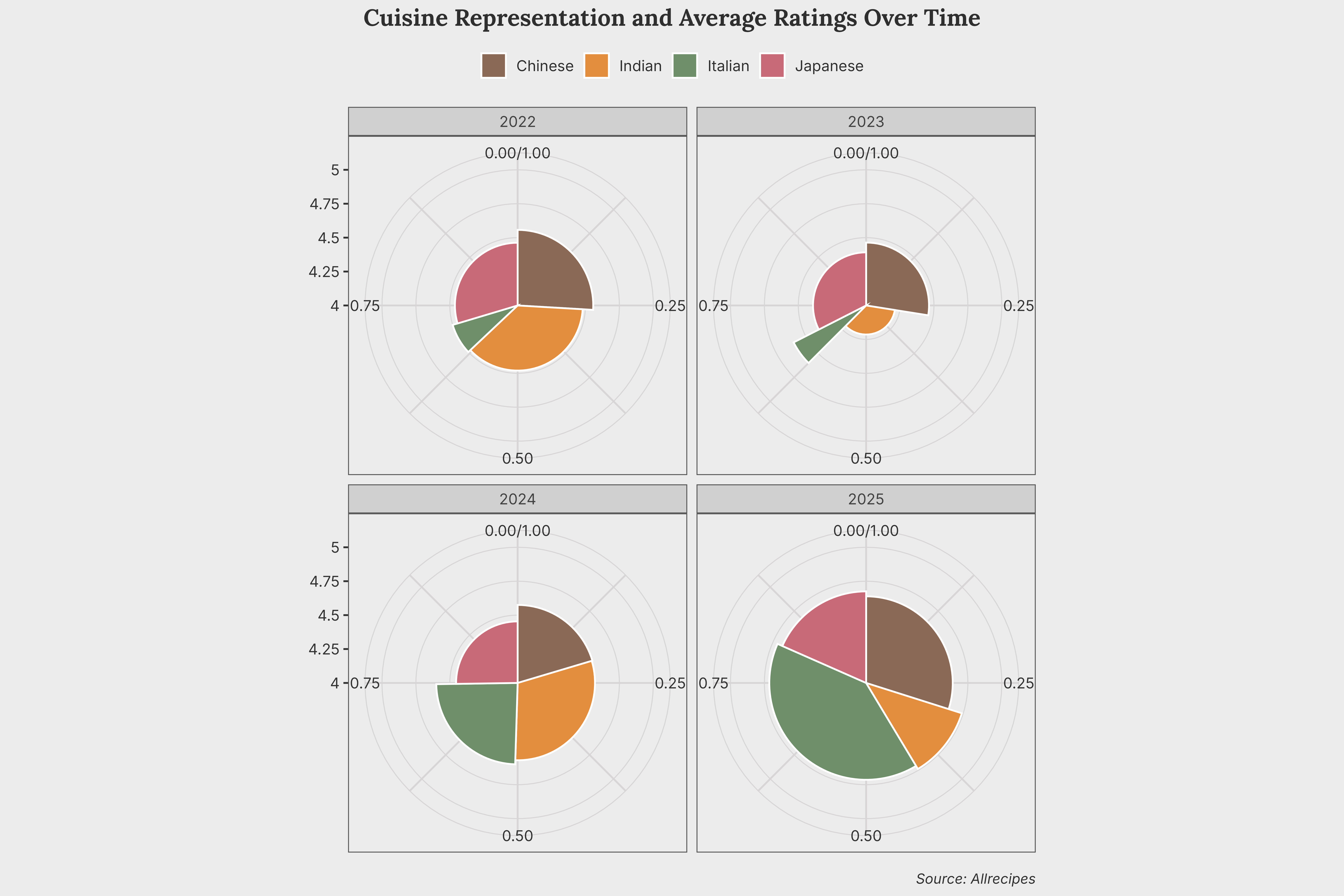
Visibility and Ratings in Each Year
How has the representation of Chinese, Italian, Japanese, and Indian food changed over time, and how have their ratings evolved during this period?
Takeaways
The mix is evening out. Fewer dominant cuisines, more variety.
Ratings stay high throughout, so this isn’t about rejection. People are simply exploring more, with Italian and Japanese riding the wave of food and travel culture.