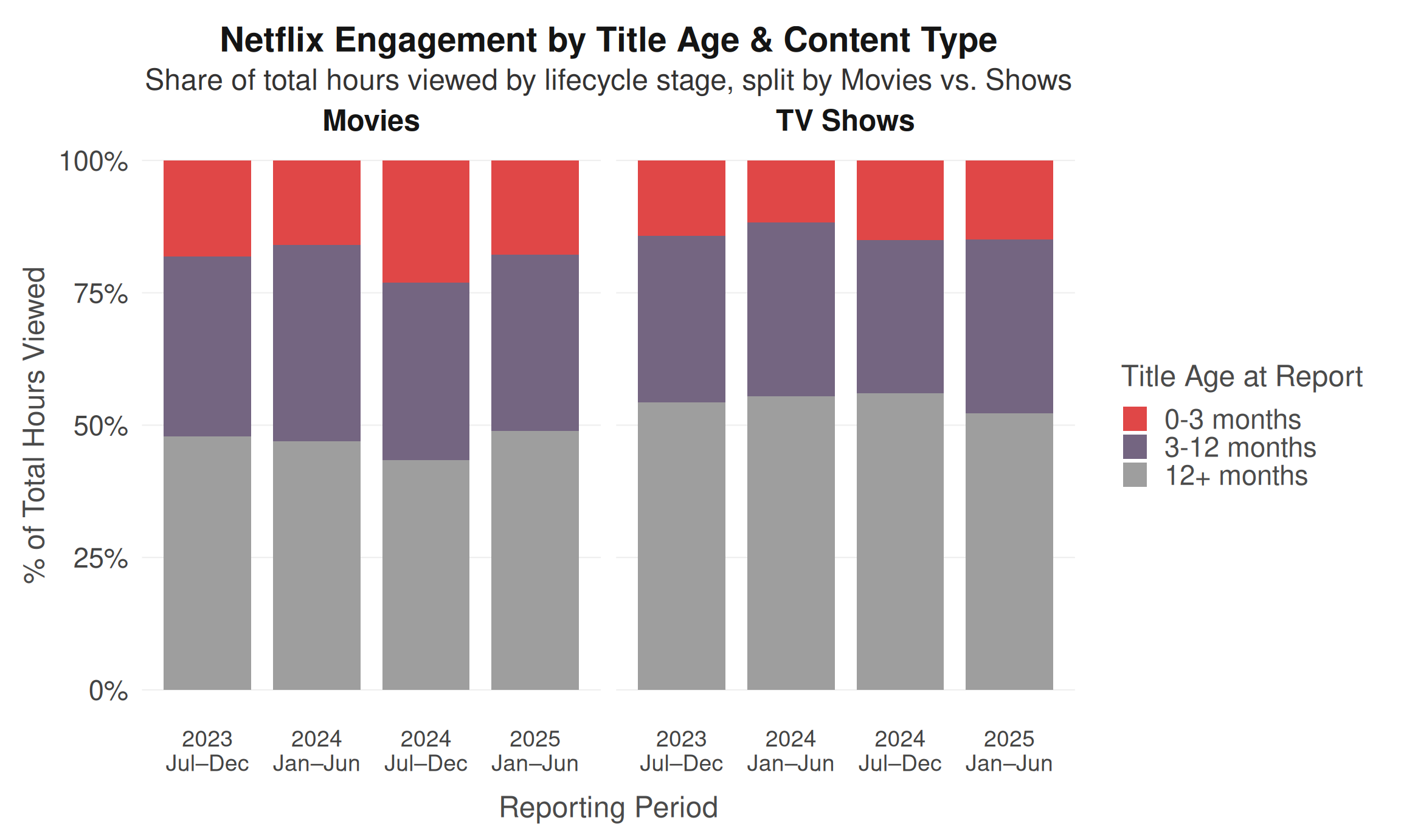
Netflix Engagement Patterns
Global Distribution and Viewer Engagement
2026-03-02
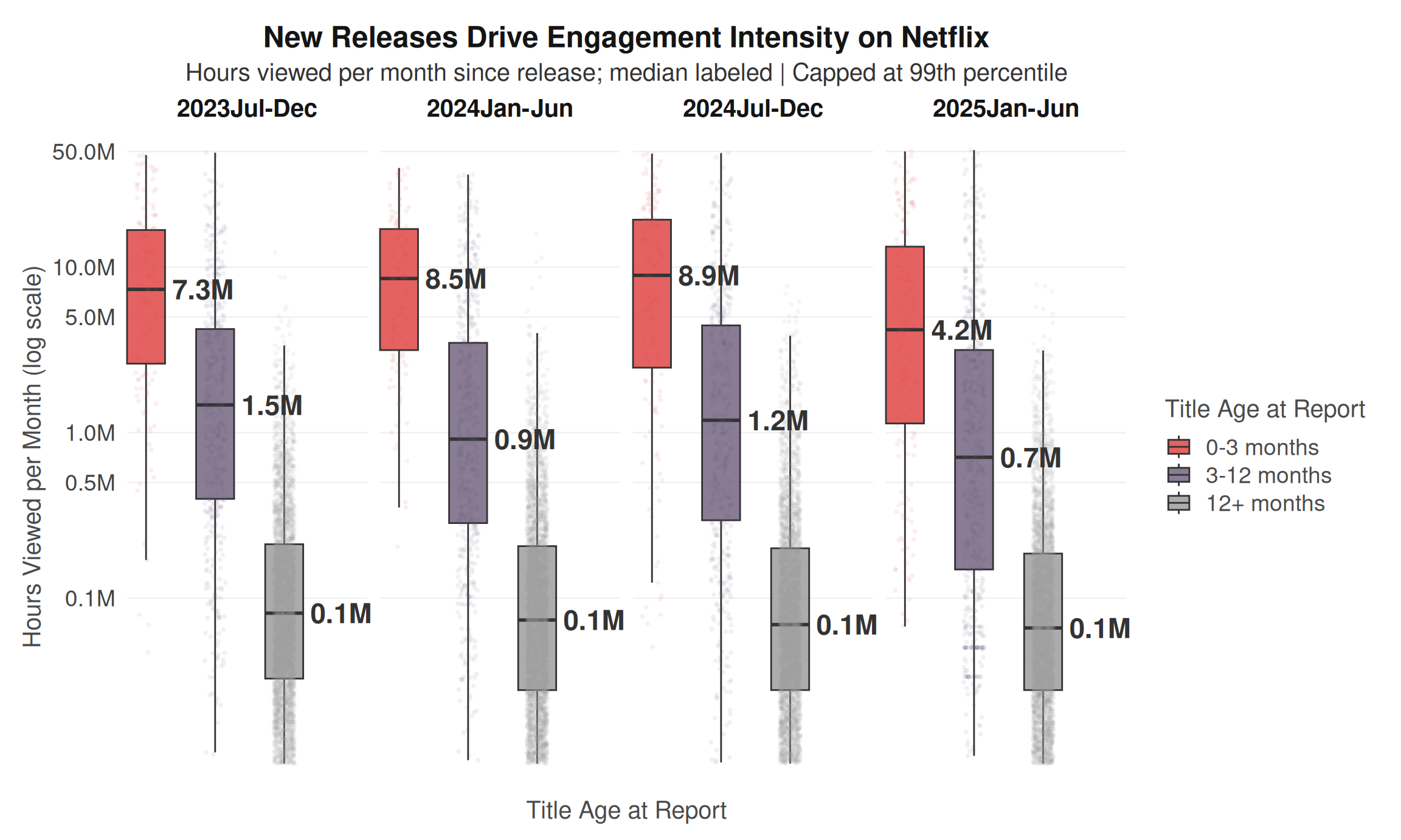
1.2: Engagement Intensity
Why normalize? Older titles have more time to accumulate hours.
views_per_month = hours_viewed / months_since_release
Key Insights
- Normalization matters
- 0–3 months has the highest median hours/month
- Intensity drops after the first year
2.1: Global and Regional Engagement
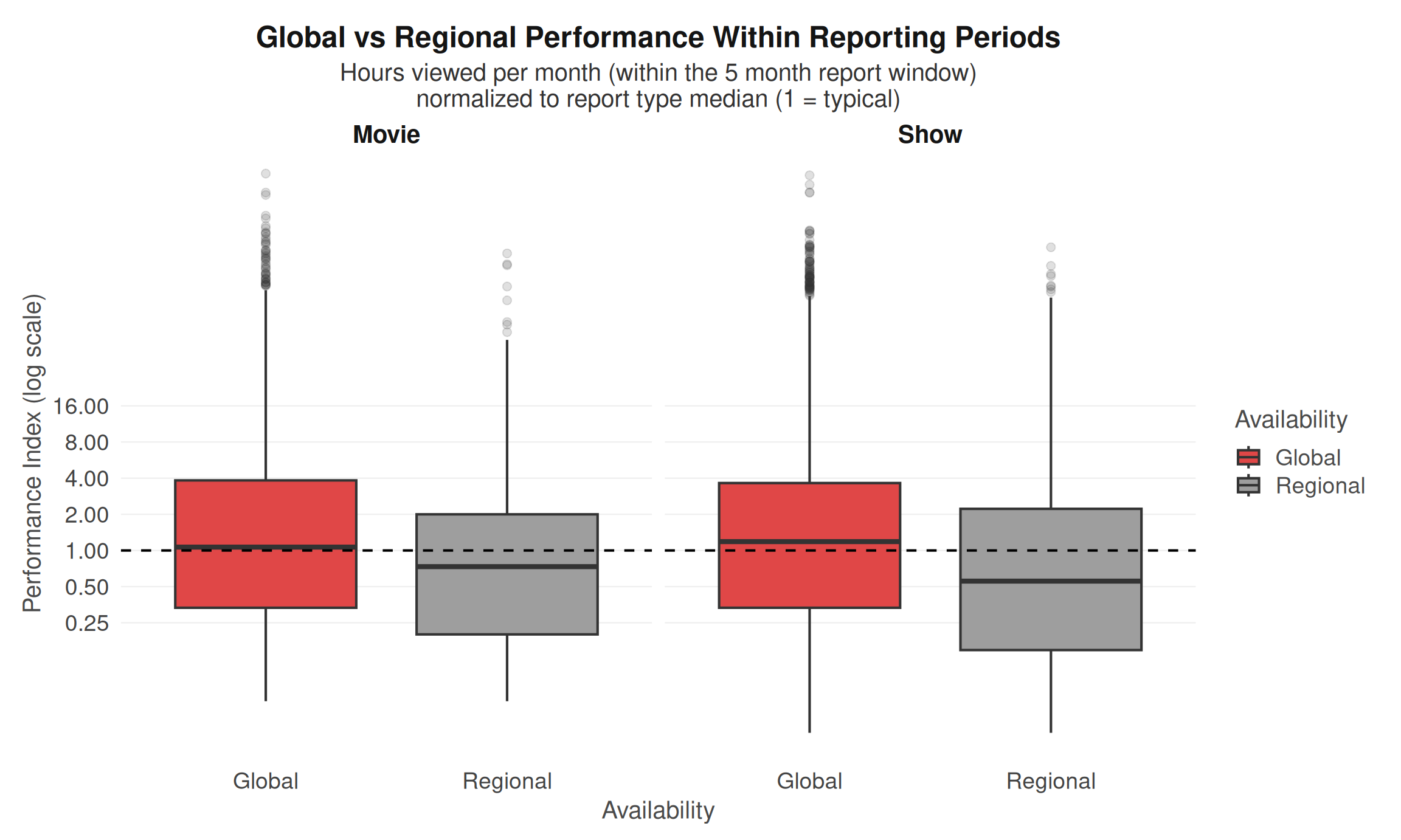
Question: How does engagement differ between globally distributed and regionally released titles across reporting periods and content type?
Key Insights
- Global titles have higher median engagement
- More high-end outliers for global movies and shows.
- Strong overlap between global and regional distributions.
2.2: Global and Regional Engagement by Period
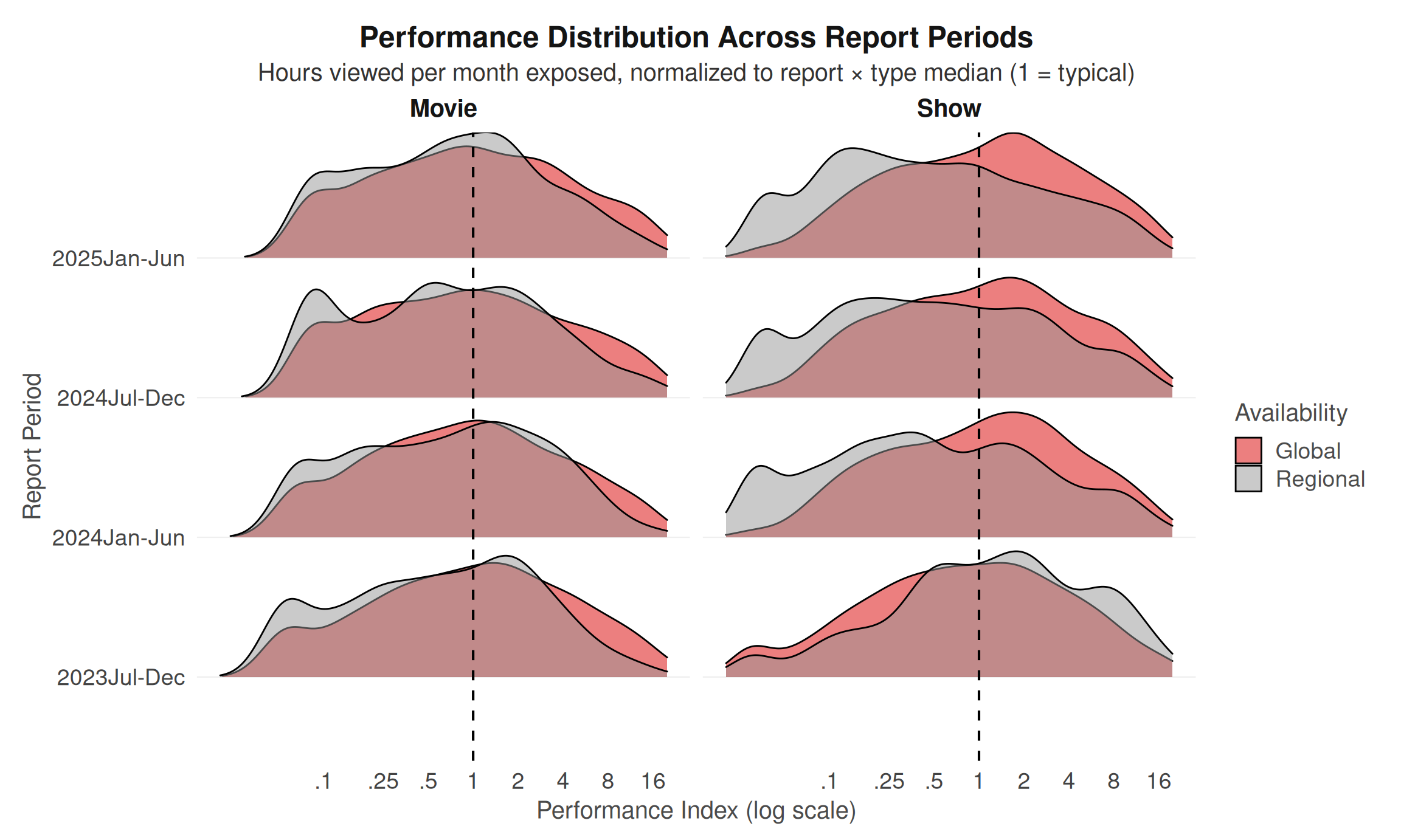
Question: How does engagement differ between globally distributed and regionally released titles across reporting periods and content type?
Key Insights
Global titles show higher median engagement than regional
The engagement gap widens for TV shows
Movie performance remains stable across releases.