Global Measles Resurgence
Regional Trends, High-Income Comparisons, and Geographic Synchronization
2026-03-03
Plot 1
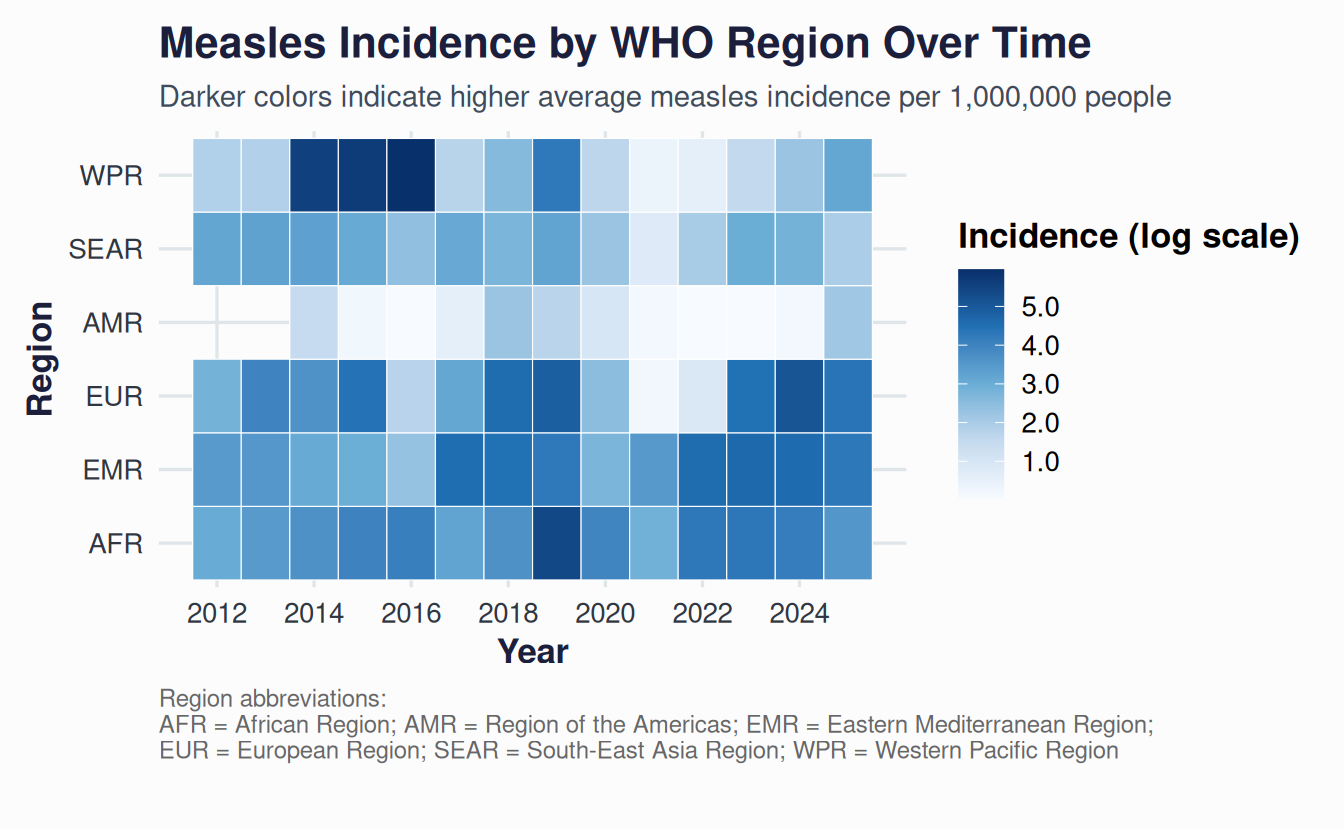
- AFR and EMR generally have higher measles incidence, shown by darker colors across many years.
- EUR and WPR experience noticeable outbreaks in certain periods, especially mid-2010s and early 2020s.
- AMR stays mostly low, while SEAR shows moderate levels with some fluctuations over time.
Plot 2
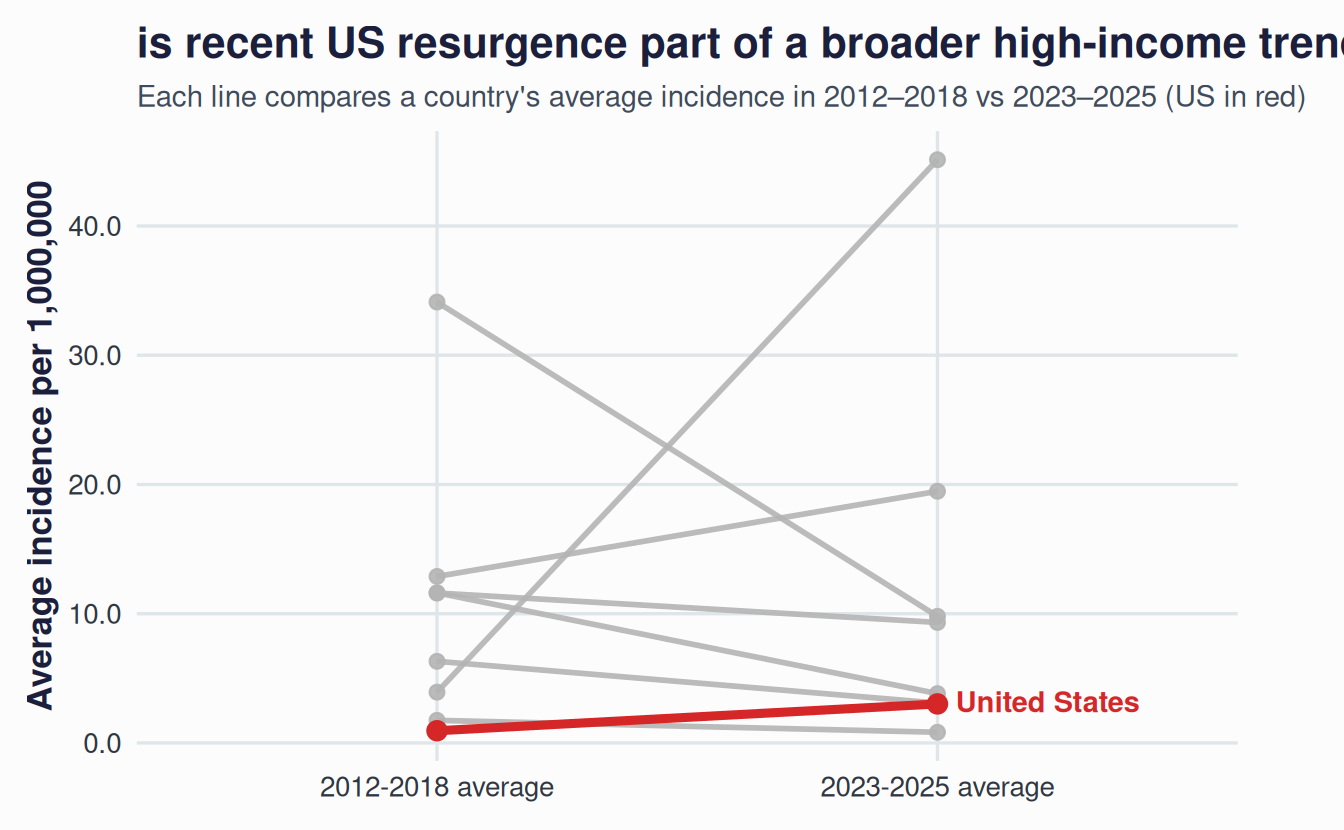
- The United States shows a small increase in measles incidence in recent years.
- Several other high-income countries also show increases, some larger than the U.S.
- Overall, the rise in the U.S. appears to be part of a broader trend among some high-income countries.
Plot 1
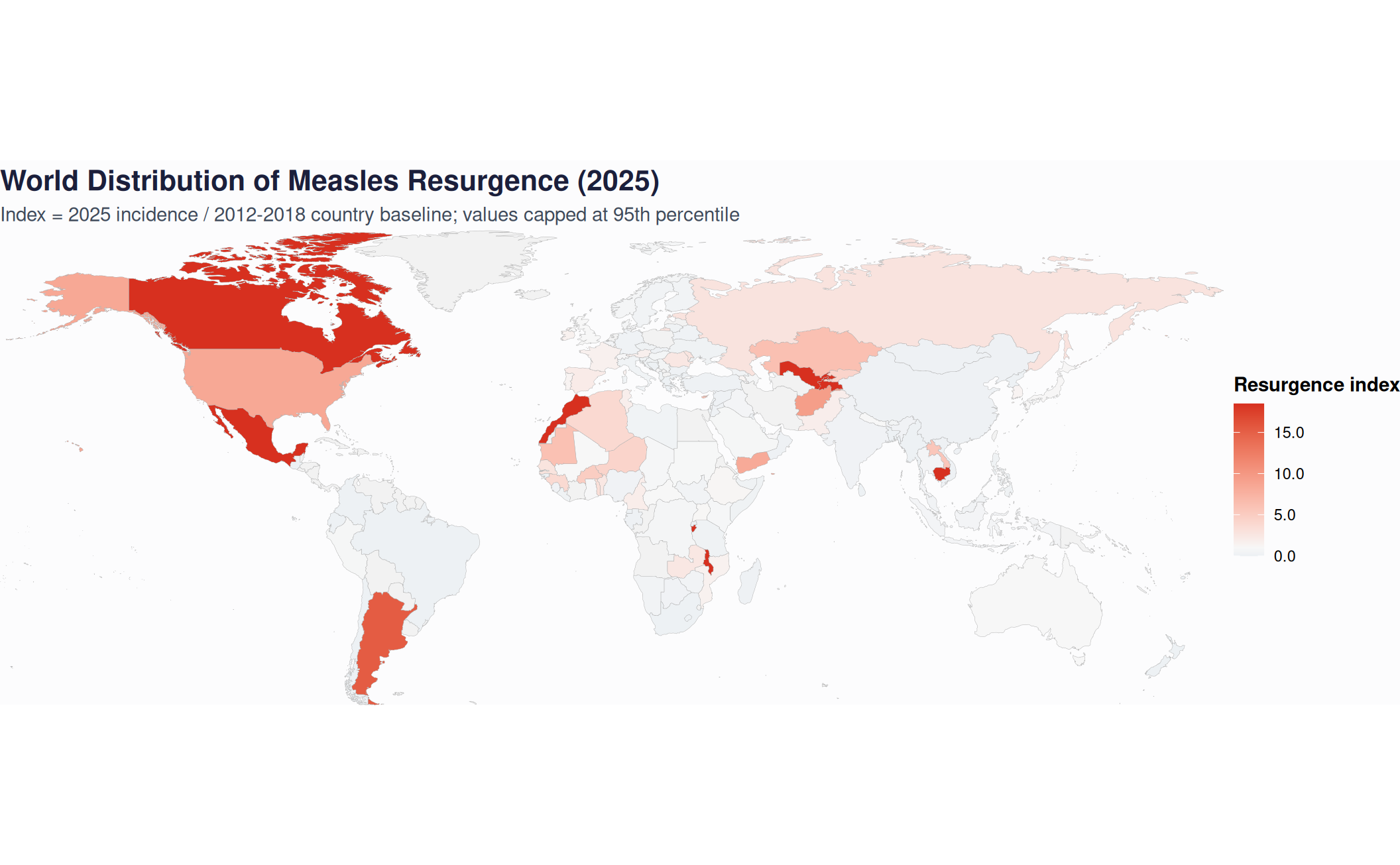
- Measles resurgence in 2025 is uneven across the world.
- Higher resurgence appears in clusters in regions like North America, South America, Central Asia, and Southeast Asia.
- This suggests outbreaks tend to happen in regional groups rather than isolated countries.
Plot 2
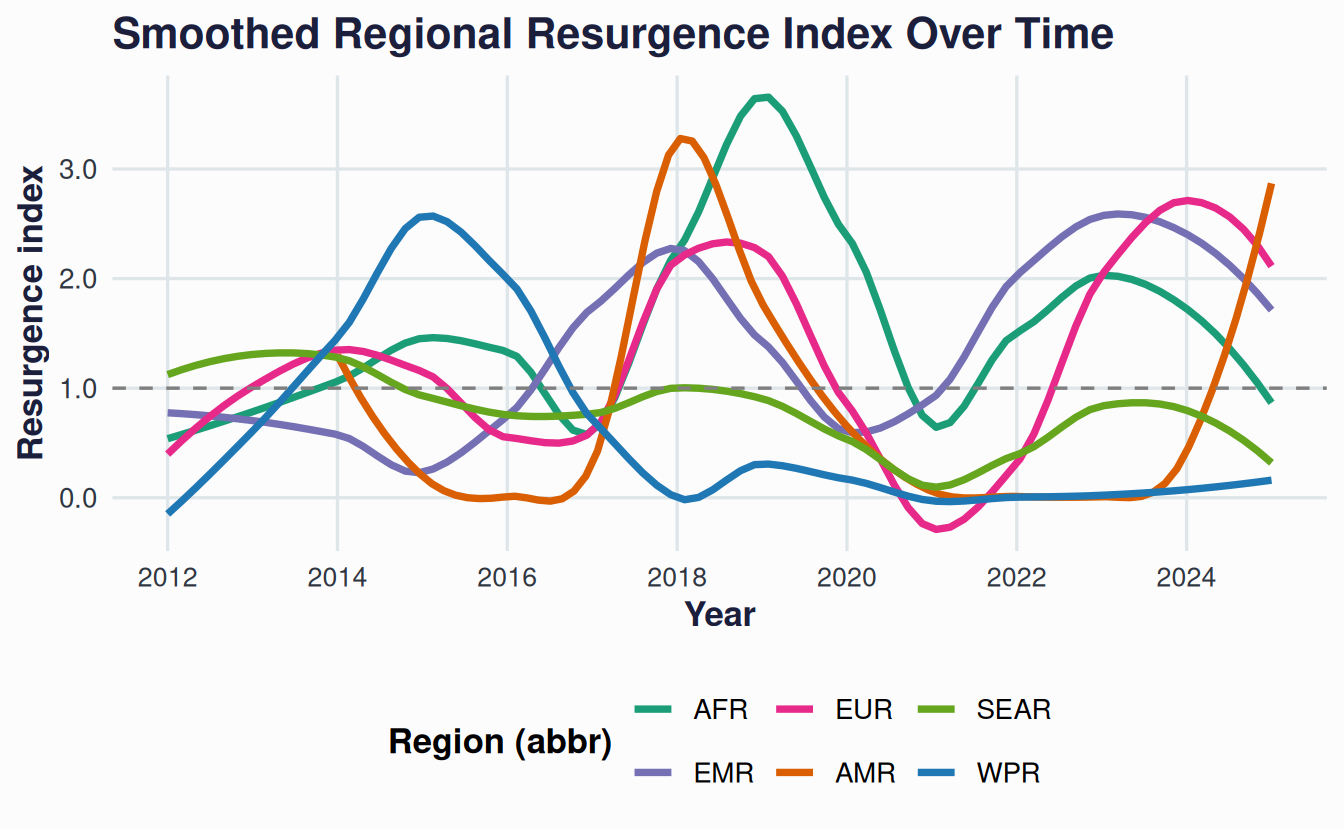
- Several WHO regions rise above the baseline around 2018–2019 and 2023–2024, suggesting shared resurgence waves.
- The timing and size of peaks differ across regions.
- This indicates measles resurgence is partly global but still shaped by regional conditions.